
How to Deposit at CHEXX from Kenya: Crypto Networks and Fees
CHEXX deposits are built around cryptocurrency rather than a direct KES or M-Pesa cashier. The documented setup covers 11 crypto assets across 9 blockchain networks, and CHEXX does not charge a fee for receiving a deposit. A Kenyan user therefore needs a supported crypto asset first, then must select the correct blockchain network and send it to the address shown in the CHEXX cashier.
The most important check is the network match. Sending the correct token over the wrong chain can create a much bigger problem than choosing the wrong card type on a conventional payment form, because blockchain transfers are generally irreversible. CHEXX’s zero receiving fee also does not remove charges imposed by an exchange, wallet or blockchain network before the funds arrive.
What you need before making a CHEXX deposit
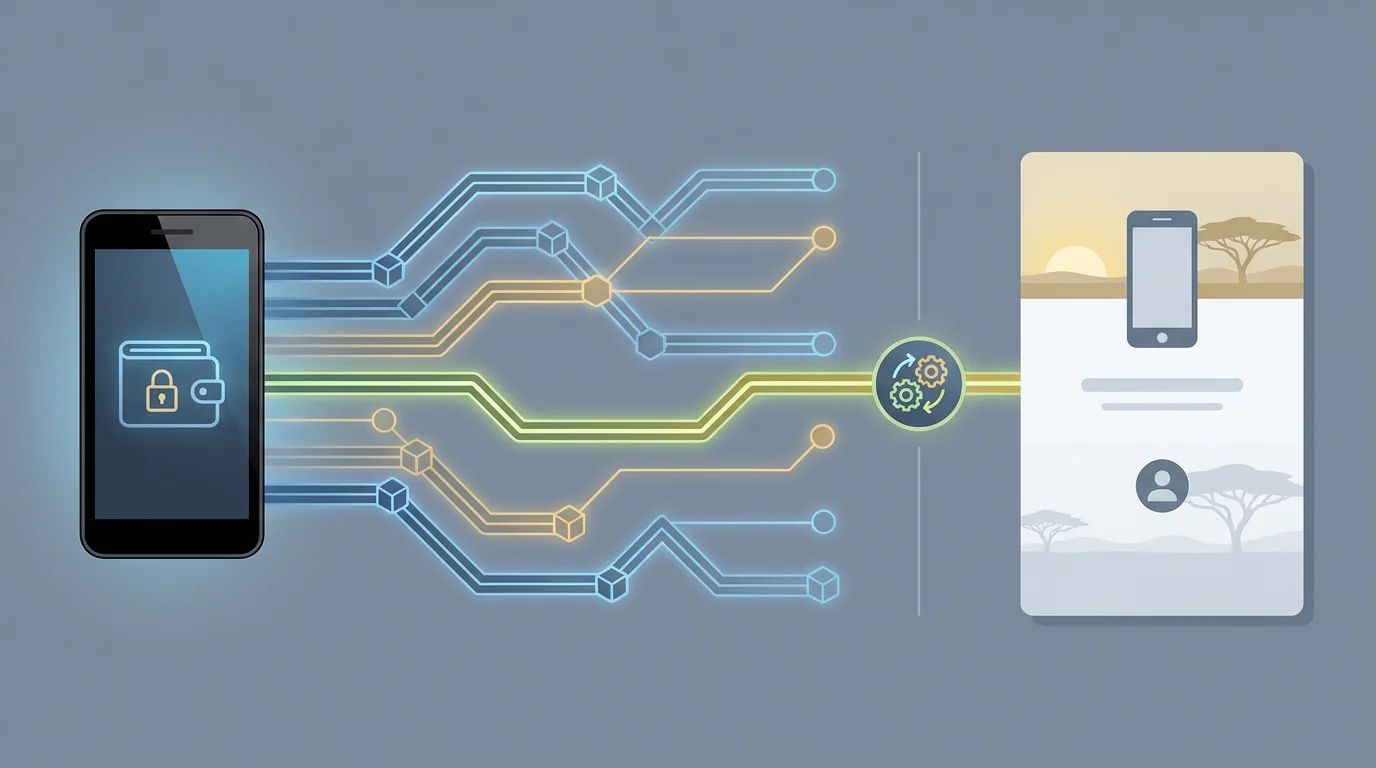
You need access to one of the crypto assets supported by CHEXX and a wallet or exchange that can send it through a compatible network. The platform’s current set includes USDT, USDC, SOL, ETH, BNB, TRX, GRAM, POL, BTC, LTC and TRUMP, distributed across nine supported network routes.
If your money starts in KES, obtaining the crypto is a separate step from depositing at CHEXX. The platform does not document a direct M-Pesa or KES deposit method for Kenya. That means any conversion from shillings or mobile money into crypto occurs through a service outside the casino and follows that service’s own fees, identity checks and transfer rules.
Once the crypto is available, the CHEXX-side process begins: choose the asset, choose the network, copy the deposit address, confirm the current minimum and send the transaction.
Choose the asset and network as one payment method
The safest mental model is to treat each asset-network combination as its own payment method. USDT on TRC-20 is not interchangeable with USDT on ERC-20 simply because both balances are called USDT. The token can move on multiple blockchains, while the deposit address shown by CHEXX is tied to the selected route.
CHEXX’s network coverage includes Ethereum/ERC-20, BNB Smart Chain/BEP-20, TRON/TRC-20, Polygon, TON, Bitcoin, Solana and Litecoin routes, together with the additional supported route for TRUMP. Stablecoins appear on several of these chains, which can give users flexibility over network costs and wallet compatibility.
| Before sending | Check |
|---|---|
| Coin or token | The asset in your wallet is exactly the asset selected in CHEXX. |
| Blockchain | The sending network matches the CHEXX receiving network exactly. |
| Address | The copied address has not changed after paste. |
| Minimum | The amount is above the current minimum shown in the cashier. |
| Fee | You have enough extra balance for any wallet or network fee. |
Why a network mismatch is the main deposit risk
Crypto transfers do not behave like bank-card payments. A bank can sometimes reject or reverse a payment that uses an unsupported route. A blockchain transaction can settle permanently to the address and chain that were used. If that chain is not the one expected by the receiving service, recovering the funds can be difficult or impossible.
This risk is highest with tokens that exist on several networks. Before confirming a transfer, read both labels: the asset and the network. Do not rely on the coin logo, and do not choose a network only because its fee is lower. Compatibility comes first.
If you are using a new wallet, exchange or network for the first time, a smaller initial transfer can limit the cost of a mistake. That does not change the platform’s deposit rules, but it is a practical way to verify that the address, network and account crediting all work as expected before moving a larger amount.
CHEXX does not charge a receiving fee
CHEXX states that it does not charge a fee for receiving deposits. This is a platform-side fee statement, not a promise that the whole funding journey is free. A Kenyan user may still encounter costs when buying crypto, withdrawing crypto from an exchange, converting between assets or paying the blockchain’s transaction fee.
Suppose an exchange charges a network withdrawal fee when you send USDT to CHEXX. That deduction is made before CHEXX receives the funds. It should not be described as a CHEXX deposit charge. Keeping those costs separate makes it easier to compare payment routes fairly.
Network costs can also change. A route that is economical today may be more expensive during heavy blockchain activity. The live fee shown by the sending wallet or exchange is therefore more useful than an old fixed-fee example.
Deposit minimums depend on the selected route
CHEXX has network-specific minimum deposits rather than one universal crypto minimum. The current payment data shows examples such as 5 USDT on several stablecoin networks, with different minimums for assets such as ETH, BTC, SOL, LTC and other tokens.
The important point is not to memorize a table and assume it never changes. Read the minimum displayed beside the actual deposit address at the moment you send. Crypto prices and operational settings can change, and a minimum expressed in the native asset does not map to a fixed KES amount over time.
This is also why this guide does not convert crypto minimums into shillings. A KES conversion would become stale as market prices move unless it were updated with a current exchange-rate source at the same time.
Why M-Pesa is not the same as a CHEXX deposit method
M-Pesa is central to payments in Kenya, and mobile money is closely connected with gambling activity in the local market. That local relevance does not establish M-Pesa support at CHEXX. The documented CHEXX cashier is crypto-centred and does not show a native KES or M-Pesa rail for Kenyan players.
A user can have an external route that begins with M-Pesa and ends with crypto, but the intermediary is doing the conversion. CHEXX receives the supported digital asset. This distinction matters for fees, dispute handling and payment records because the casino is not responsible for every step taken before the crypto reaches its address.
If direct mobile-money funding is a non-negotiable requirement, CHEXX’s payment model is a poor match. If you already hold supported crypto, the extra local-currency conversion step disappears and the deposit process is much more straightforward.
Kenya’s 5% wallet-deposit excise rule
Kenyan tax law applies 5% excise duty to amounts deposited into a customer’s betting or gaming wallet. The rule is part of the Kenyan tax framework and took its current form from July 2025. It is relevant background for anyone comparing gambling payment costs in Kenya.
However, that statutory rule should not be turned into a claim that CHEXX itself will automatically deduct 5% from every crypto deposit sent by a Kenyan user. CHEXX is an international crypto platform, so the statutory rule alone does not establish how that Kenyan tax applies to a particular offshore blockchain transfer.
For practical budgeting, distinguish the rule from what appears on the actual transaction. Check the amount sent, the amount credited by CHEXX and any fee shown by the external wallet or exchange. Do not assume every difference is tax, and do not assume the absence of a visible deduction means the local tax framework is irrelevant.
Step-by-step deposit process
- Open the CHEXX cashier. Go to the deposit section while signed in to the correct account.
- Select a supported crypto asset. Choose the coin or token you actually hold or intend to acquire.
- Select the blockchain network. Treat this as a required second part of the payment method.
- Read the current minimum. Make sure the amount you plan to send is large enough for the selected route.
- Copy the deposit address. Avoid typing long blockchain addresses manually.
- Set the same network in your sending wallet. Stop if the wallet cannot send over the network shown by CHEXX.
- Review the transfer fee. This can be charged by the wallet, exchange or blockchain even though CHEXX takes no receiving fee.
- Check the address again. Compare several characters at the beginning and end after pasting.
- Send the transaction. Keep the transaction hash or wallet record until the balance is credited.
What to do if a deposit is not credited immediately
First check the transaction status in the sending wallet or blockchain explorer. A transaction that is still pending has not completed the blockchain part of the journey. If it is confirmed but not visible in CHEXX, verify that the correct asset, network and destination address were used.
Keep the transaction hash, amount, asset, network and time of transfer available. Those details are more useful to support than an image showing only a reduced wallet balance. Do not send a second larger transfer to the same route until you understand what happened to the first one.
If you entered a different network than the one selected in CHEXX, contact support with the transaction information, but do not assume recovery is possible. Network mismatch is precisely why checking both the asset and chain before sending matters.
Depositing with a bonus in mind
A deposit can also trigger promotional conditions. CHEXX has a multi-stage welcome package and other rewards, so a player who intends to use a bonus should read the active offer before sending funds. Deposit size, eligible payment route and wagering rules can affect whether the reward is credited and how later withdrawals work.

The payment transaction and the bonus are separate decisions. A successful blockchain deposit does not by itself mean every promotion condition has been met. If you are using the welcome package, review the welcome bonus details before choosing a larger deposit solely to reach a percentage match.
What happens after the deposit
Once the transaction is confirmed and credited, the balance can be used on the platform according to the account and product rules. When you later want to move funds out, the process introduces additional conditions that do not apply to the initial deposit.
Withdrawal method, account verification, any applicable turnover rule and the destination wallet all become relevant at that stage. The withdrawal guide covers those cashout questions separately so they are not confused with deposit mechanics.
For a broader comparison of assets, networks, M-Pesa context and the general funding model, see the payment methods page.
Deposit verdict for Kenya
CHEXX is straightforward for a Kenyan player who already uses crypto: choose one of the supported assets, match the network exactly, check the live minimum and send to the displayed address. CHEXX’s own receiving fee is zero, although the sending wallet, exchange or blockchain can still add costs.
The extra friction appears when the starting point is KES or M-Pesa. There is no documented direct CHEXX mobile-money rail, so a user who holds only shillings needs an external conversion step before the casino deposit begins. The safest approach is to treat that conversion and the CHEXX transfer as two separate transactions, check all fees at each stage and never send until the asset and network match.
For the full product assessment beyond funding, return to the CHEXX Kenya review.
The full picture is in our CHEXX review for Kenya.
The way back out: withdrawals.
 Sweet BonanzaPragmatic Play
 GemonexBetixon
 Romance VFugaso
 The Book of AmaterasuMascot Gaming
 ReactoonzPlay'n GO
 Astro GemsMaverick
 The Boom SquadGenesis Gaming
 Hercules Power WildFugaso
 Fruit CocktailIgrosoft
 Love Gems Hold and Win1spin4win
 Sweet RewardBF Games
 Epic JourneyRed Tiger Gaming
 Money Train 3Relax Gaming
 American BlackjackClassic
 Vegas Downtown Blackjack GoldGold Series
 VIP American BlackjackVIP
 Multihand BlackjackMultihand
 Vegas Strip BlackjackClassic
 Atlantic City BlackjackClassic
 Blackjack Surrender OriginsSurrender
 Blackjack 21 ClassicClassic
 Ultimate Blackjack with RachaelLive-style
 Premier Blackjack with Side BetsSide Bet
 Single Deck Blackjack GoldSingle Deck
 Blackjack Lucky LadiesSide Bet
 Classic BlackjackClassic
 Double Exposure BlackjackDouble Exposure
 Perfect Pairs BlackjackSide Bet
 RouletteRelax Gaming
 Monopoly Roulette TycoonThemed
 French RouletteNetEnt
 Multifire RouletteMultiplier
 Quantum RouletteMultiplier
 Double Ball American RouletteDouble Ball
 Mini Roulette 3DMini
 American RouletteClassic
 Roca Riches RouletteThemed
 Immortal Romance RouletteThemed
 European RouletteClassic
 Lucky RouletteClassic
 Who Wants to Be a Millionaire RouletteThemed
 Dragon RouletteThemed
Prepared by the Chexx Casino editorial staff.